Dental
By the age of 5 years, 50% of cats and dogs will have at least one painful dental problem. A build-up of plaque can lead to gingivitis or periodontal disease, which may infect teeth and bones, allowing harmful bacteria to travel via the bloodstream to other organs such as the heart or kidneys. If you’re unsure about your pet’s dental health, it might be time for a FREE DENTAL CHECK with one of our nurses at Welcome Bay Vets.
Common signs of dental issues include:
Bad breath
Yellow staining or tartar build-up on teeth
Red, sore or bleeding gums
Pets often continue to eat normally despite severe dental disease, so it pays to get them checked.
To book your dental procedure please call us on 07 544 2604
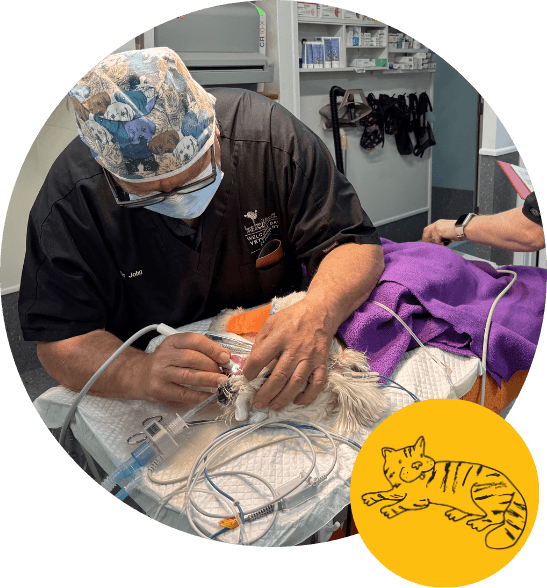
Maintaining Healthy Teeth and Gums
A good diet plays an important role in keeping your pet’s teeth and gums healthy. Soft foods provide little dental benefit, while specially formulated dental diets can help to clean teeth as your pet chews.
Regular tooth brushing is another effective option, but needs to be done consistently (2–3 times per week) with a cooperative pet. Ask our team if you'd like to be taught how to do this.
Dental treats/chews are a great addition to maintain dental health. Ask us for our recommendations - not all treats are helpful, and some can do more harm than good!
What's involved in a pet dental?
Under a general anaesthetic, our team take dental x-rays to assess tooth health below the gumline. Each tooth is examined and probed, and a decision is made regarding treatment or extraction for each tooth based on x-ray findings, probing, and occlusion assessment.
Finally, plaque and tartar is scaled off with specialised dental equipment, and teeth are polished.
Be wary of non-vets offering teeth-cleaning services in conscious pets. They do not clean below the gumline, assess tooth health or treat problems (and can result in an anxious pet that won't let you look in the mouth at all!).